It's the day after Thanksgiving.
Yesterday was actually a lovely day. My parents, our kids, my husband, and some of my parents' friends all gathered together. There was good food, good company, and a lot to be grateful for.
And I was sad.
I spent a good part of the day wishing more of my family had made the effort to come visit. We all live far apart, and I felt the distance. There was a part of me that wondered whether the people who weren't there cared enough to make the trip. I know that's my emotional interpretation, not necessarily the truth. But it was how I felt. I also didn't want my girls walking away from Thanksgiving feeling like their aunt, uncle, and cousins didn't want to be with them. So I put those feelings somewhere in the background and enjoyed the day as best I could.
Then came Friday.
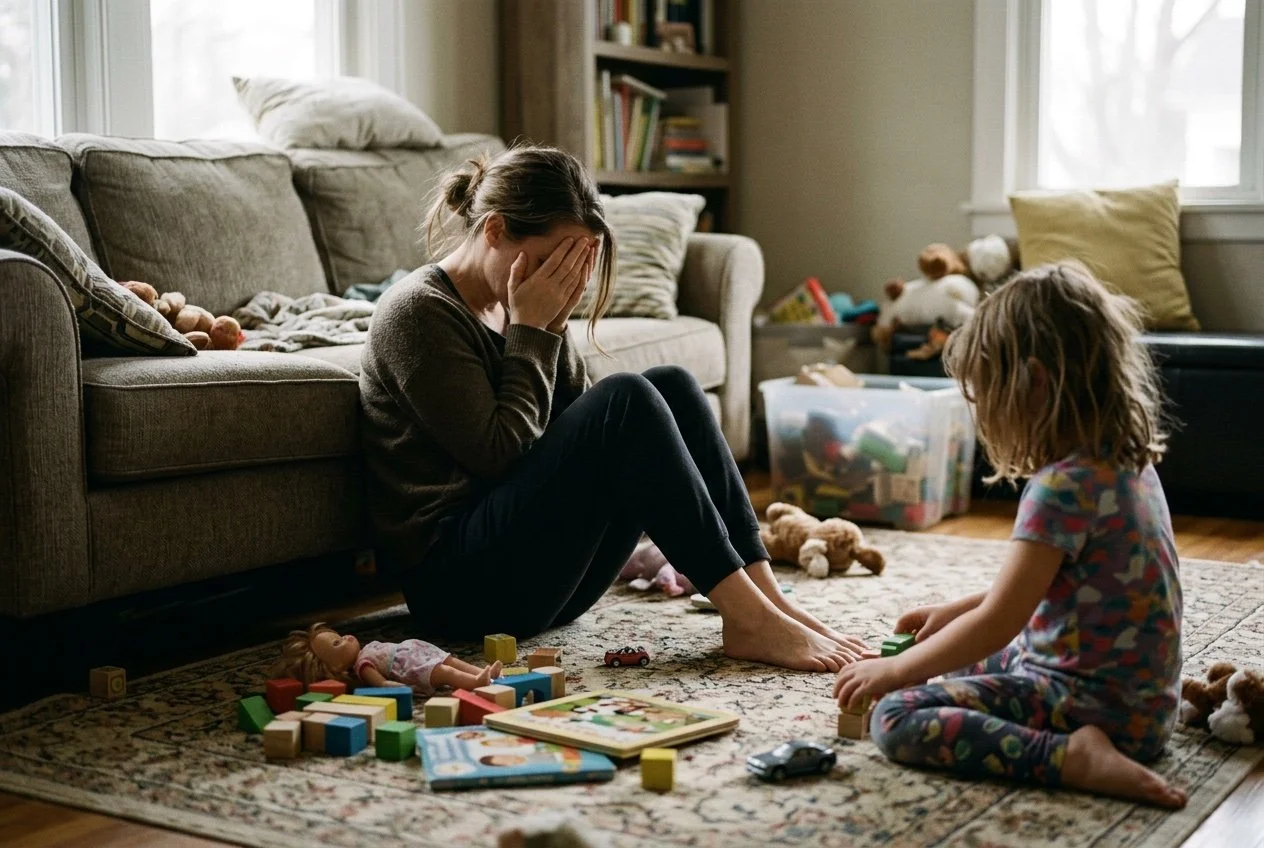
We had planned a relaxing day at home. A little picking up, some downtime, nothing particularly demanding. Except apparently, homesickness, a messy house, and tired kids aren't a great combination. When it came time to clean up the playroom, everything was getting on my nerves. My girls couldn't move fast enough. I wanted everyone to hurry up. I wanted to get out of the house. I wanted to feel happy again.
And I exploded.
At one point, while yelling at my daughter to move faster, I actually started to recognize that I was yelling. So, naturally, I said something along the lines of, "Thank you for letting me raise my voice. My body apparently needs to scream right now. I'm not actually as angry as I sound."
Yes. I said that while still yelling. Facepalm.
Eventually, I was able to calm myself down, and we had a big repair afterward. Because, oof. Not my shining parenting moment. But honestly, it wasn't until I sat down to work on this blog that I realized how connected all of it was.
And it got me thinking about a question I hear from moms, and sometimes ask myself:
Am I repeating the cycle?
If you've ever heard yourself say something, noticed your tone, or reacted in a way that felt uncomfortably familiar, this one is for you.
Here's the short answer before the long one: One snap is not a verdict. And the thing that shapes what your kiddos carry forward isn't whether you ever lose your patience. It's what happens next, and what you begin to notice along the way.
Why did I snap at my kids after being with my family?
Here is a pattern many of us recognize. We held it together in the room. We were pleasant. We passed the potatoes. We didn't say the thing, in the room where saying it might have felt uncomfortable or cost us something. We swallowed the disappointment. We managed our reactions. We tried to make the day good for everyone.
And then we got home. Or the next morning came. And the snap landed on the people who are safest to snap at.
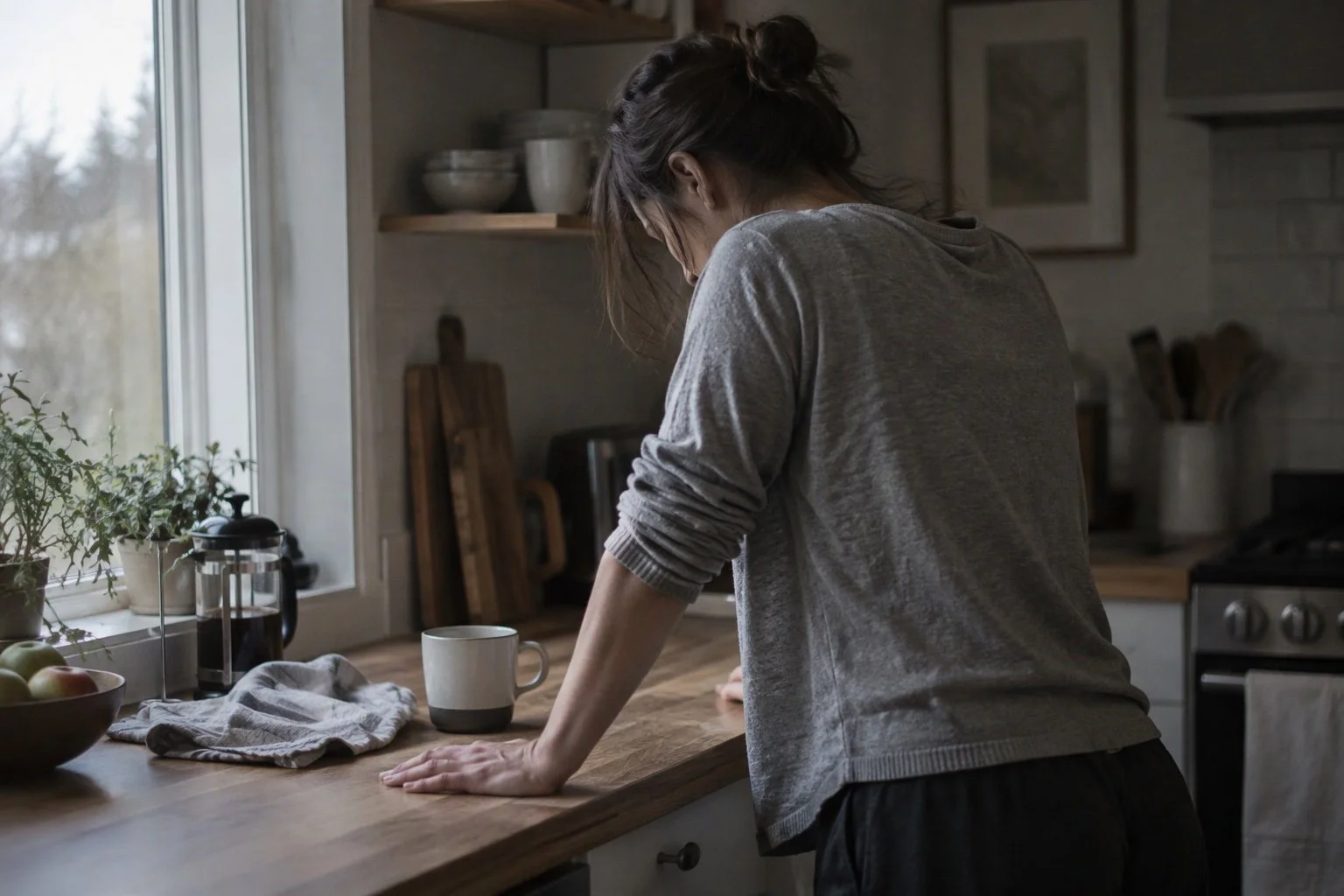
Sometimes we don't realize how much we've been holding until we're finally somewhere we can let go. Maybe your jaw was tight. Maybe you noticed yourself holding your breath. Maybe you were anticipating the next comment, the next request, or the next thing someone might need from you. Sometimes our bodies are telling us something long before we have the words for it. And sometimes the feelings we didn't have room for earlier show up somewhere else entirely.
For me, it was a playroom.
I also realized something else while writing this. My mom isn't a yeller. She's more of a push-her-feelings-down kind of woman. And I've noticed that when she's doing that, irritation can start to creep in. I don't think I necessarily repeat her exact behaviors. But I recognize something familiar in the process: feelings getting pushed into the background until they start coming out sideways.
That's an interesting thing to sit with. Because sometimes when we talk about breaking cycles, we imagine we're trying not to become our mothers. But family patterns aren't always exact copies. Sometimes they show up in different forms. And recognizing the pattern doesn't mean blaming the person who came before us. It means getting curious about what we've learned, what we've carried, and what we might want to do differently.
Why does the whole stretch feel harder than the day itself?
Part of the answer is that the holidays were never actually just one day. It's a stretch. Roughly six weeks from late November into early January, when the usual scaffolding quietly comes down. No school rhythm. No predictable mornings. More time together. More family dynamics. More expectations. And there we are, back in rooms we don't run, with people who have known us since before we had a self.
Layered on top of all of it is the expectation to make it good. That pressure isn't attached to any one holiday. It shows up whether your calendar holds eight nights of Hanukkah, one big family dinner, twelve days of something else, or a plain school break with nothing planned at all.
If your season is eight nights, you already know the math is different. There isn't one single event to brace for. There are eight. The toll can stack night after night, without a clean "it's over now" moment. And if your break has no holiday in it at all, just days of unstructured time, no ritual, no script, and the expectation to make it magical, that can be its own kind of hard.
There's also the possibility that this time of year brings up grief, loneliness, or disappointment about the family you have, the family you don't have, or the family you wish could be together. All of that takes up space.
One more thing, said gently. If a January resolution is already forming (this year I'll be more patient), notice that too. For a mom who is already watching herself closely, a resolution can become another scorecard, and the calendar hands it a deadline.
Does one bad moment mean I'm turning into my mother?
Two things can be true at the same time. The fear itself means something. We don't monitor ourselves for patterns we don't care about. If you're asking the question, it's likely because you want something to be different.
And one hard moment is not a trajectory.
We often talk about generational patterns as if they pass cleanly from one generation to the next. But family patterns are more complicated than that. They can show up in how we handle conflict, how comfortable we feel expressing our needs, how we respond to disappointment, or how quickly we move into guilt when someone is upset with us.
Sometimes we repeat the exact behavior we grew up with. Sometimes we do the opposite, only to find ourselves struggling in a different way. You might have grown up with a parent who yelled, and now you work incredibly hard to keep your voice calm, even when you're overwhelmed. Or you might have grown up with a parent who never expressed disappointment, and now find yourself struggling to communicate what you actually need.
Neither story makes you a bad mom. But both are worth getting curious about.
Breaking a cycle isn't about proving you're nothing like your parents. It's about recognizing the patterns you've inherited, deciding which ones you want to keep, and learning new ways to respond when the old ones show up.
What actually helps after the fact?
Repair. Not a snap-free season. Repair.
Repair is small and often unglamorous. It sounds like walking back into the kitchen and saying, "Hey, I snapped at you about the cup. That wasn't about you. I was feeling overwhelmed, and I didn't handle it well. I'm sorry." No lecture attached. No lesson folded in. Just the true version, at kid height.
And repair doesn't erase the snap. Both things stay true. The snap happened, and the ending changed anyway.
It's also important to remember that repair isn't a free pass to keep repeating the same behavior. If you're finding yourself apologizing for the same reactions over and over, that's information worth paying attention to. You might need more support, more space, different boundaries, or a better understanding of what's happening inside you before you reach that point.
And sometimes the most important repair starts with yourself. Instead of immediately moving into guilt and deciding you're a terrible mother, pause. Get curious.
What was I carrying before that moment? What was I needing that I didn't acknowledge? What was happening in my body? What felt like too much?
You don't have to excuse the reaction to understand it.
Your kiddos don't need a mother who never misses. They need a mother who is willing to come back, take responsibility, and keep learning.

Putting it together
If this stretch has already left a mark on your week:
1. Name what you were holding. Give yourself permission to acknowledge the disappointment, frustration, sadness, or exhaustion you may have pushed aside.
2. Repair with the one who got the spillover. Keep it small and honest. Take responsibility without making your child responsible for your feelings.
3. Get curious about your reaction. Instead of treating it as proof that you're failing, consider what your body and emotions might be telling you. What did you need? What felt like too much?
You are not doing the season wrong because it has been hard. You don't have to prove you're different from your mother to become a different kind of parent.
You are a mom paying close attention in a stretch that asks A LOT of a person. You're noticing something you don't want to keep repeating. And that noticing gives you somewhere to begin. You can love your family and still feel disappointed. You can be grateful for a lovely Thanksgiving and still wish things were different. You can want to be a patient mom and still have days when your patience runs out. All of those things can coexist.
And learning to make room for your own feelings, rather than pushing them aside until they come out somewhere else, is part of the work.
This is exactly the kind of thing we talk about at The Mama Lunch Break, my monthly gathering for moms. Real conversation, no performing, kiddos welcome. If you want a room where this gets said out loud, we meet the second Monday of every month in Carlsbad.
And if you're in San Marcos or Encinitas and want a place to think some of this through one on one, my door is open.
By: Ellie Messinger-Adams, LPCC
Founder and Therapist at ēma therapy
Offices in Encinitas and San Marcos
Telehealth across California