

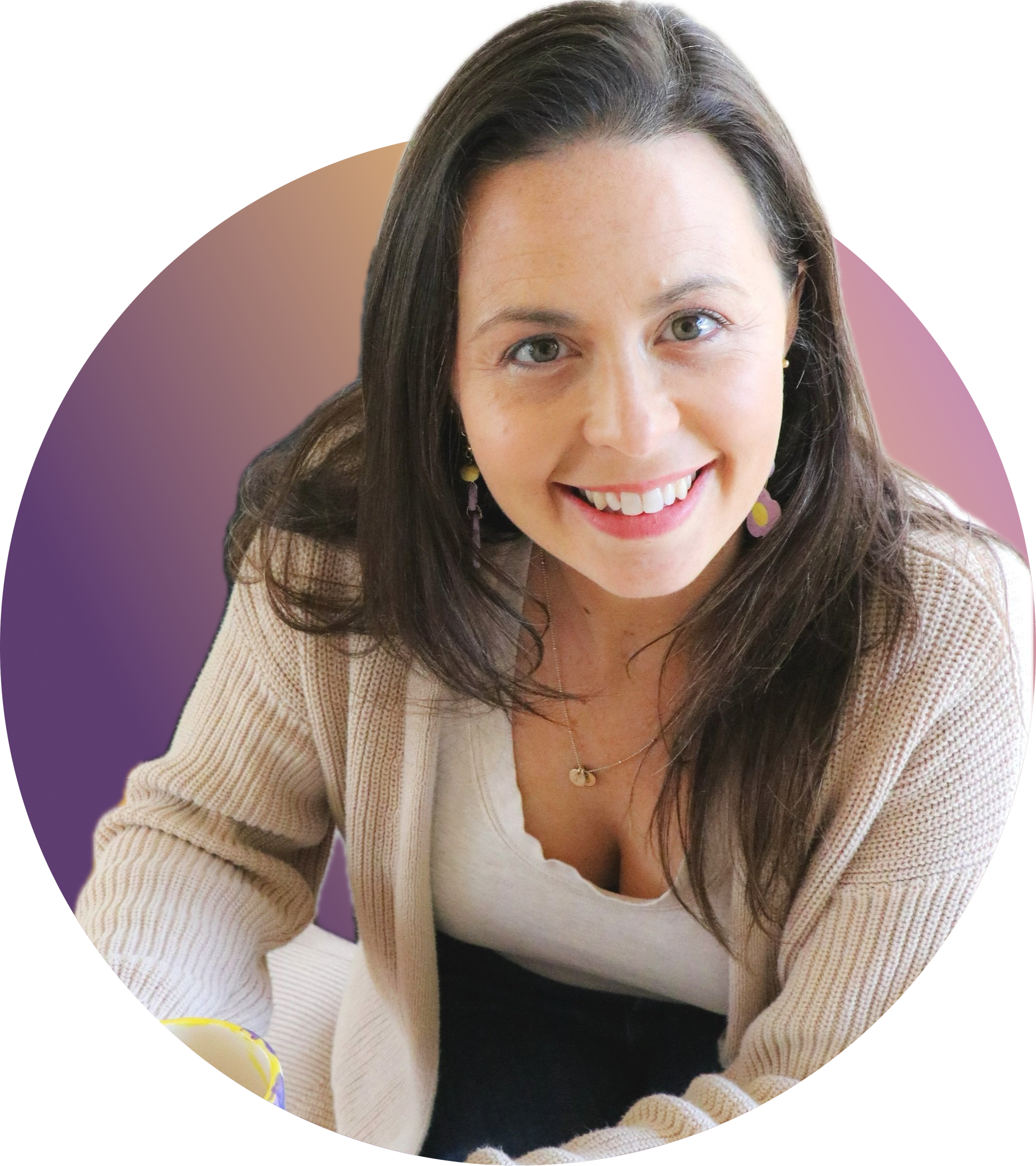
Hi! I'm Ellie
A licensed therapist based in North County San Diego and mom of 2 spicy and spunky girls.
I specialize in supporting moms navigating what I call the Motherhood Midlife Crisis: that space where you're no longer who you were, not quite who you expected to be, and not totally sure who you are now.
I help moms, and women becoming mothers, get unstuck from the patterns they were handed and build something that actually feels like theirs.
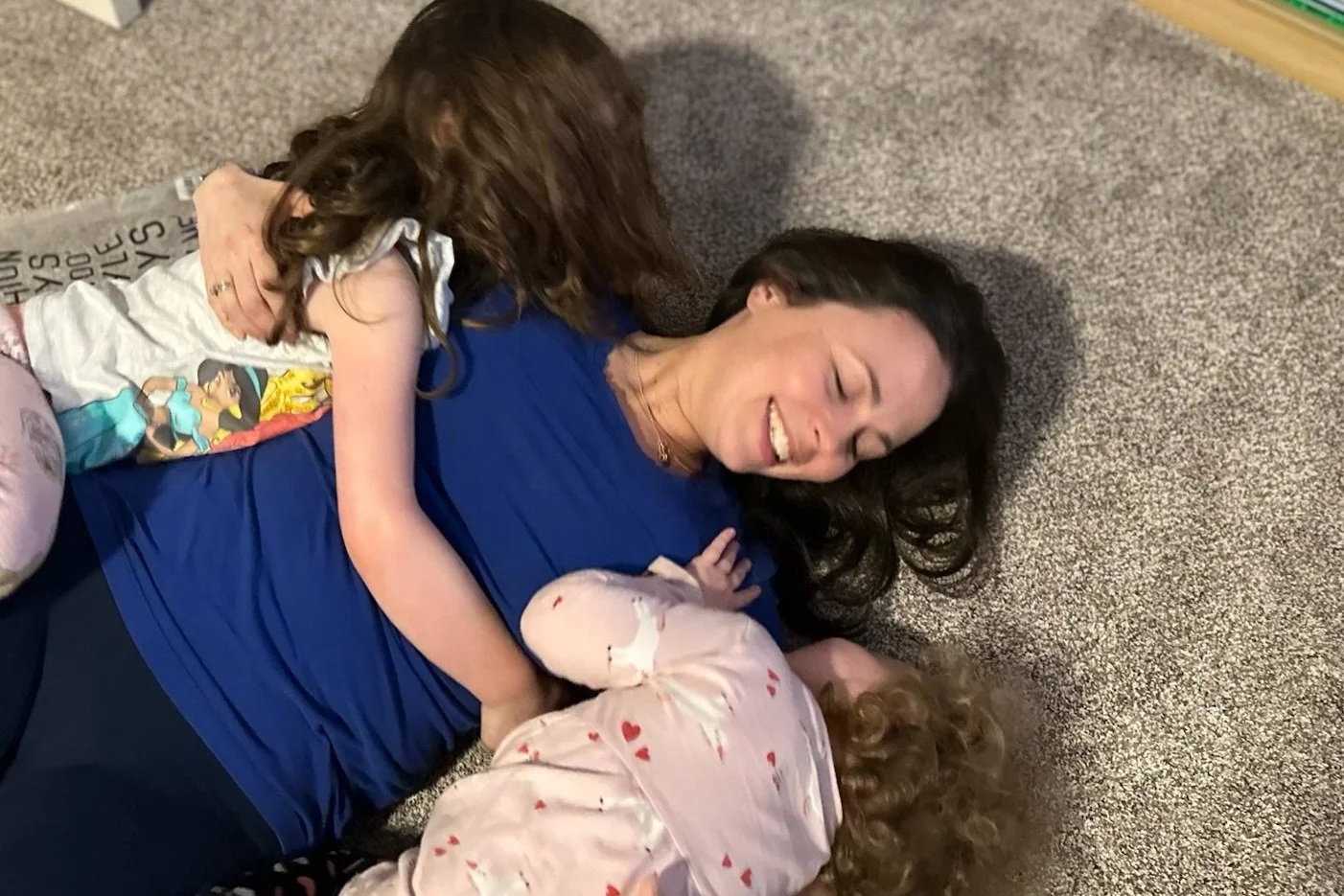
If you’ve landed here, you might be thinking: “I should have this figured out by now.” You are trying hard. You love your kids. Yet something still feels off. You might feel like you are running on fumes, losing yourself between everyone else’s needs, quietly wondering where on earth you went.
Maybe you are:
Pregnant or newly postpartum, trying to hold it together while everything shifts
Further in, figuring out how to be a fully realized human and a mom at the same time.
Actively working to break a generational cycle before it reaches your kids
Whatever brought you here, the feeling underneath is usually the same: I love my kids. I am trying so hard. So why does this still feel so hard? That question is often exactly the right place to start.
If this resonates, we can explore it together. I offer a free 15-minute intro call, no pressure, just a simple conversation to see if we might be a good fit.
This Work Is Personal
My first steps into motherhood looked nothing like I imagined. I pushed my body too hard out of fear of letting others down, experienced postpartum depression and anxiety, struggled to bond with my daughter, and fought a breastfeeding battle I couldn’t win alone.
I’ll never forget holding my hungry baby and telling my husband, “No, don’t give her that bottle. If I just make her hungry enough, she’ll figure it out.” The guilt. The visceral voice screaming that I had failed her. That was my rock bottom.
What pulled me through was support. It showed me something I carry into every session: your ability to show up for your kids is directly tied to how supported you feel. When I had my second baby during COVID, I approached postpartum differently. The hard parts still came, but I was steadier.
That experience is why this is the work I do. I know what is at stake when moms don’t get support. I also know what becomes possible when they do.
The Name - ēma therapy
Ēma comes from my initials, E.M.A., but it also means so much more. Ēma is the Hebrew word for mother. Ma is a yogic term representing a nurturing, protective, and wise presence.
This practice was built from my own values and experience of motherhood, everything that came with it. It is a space where your voice matters, your story is honored, and the all your parts are welcomed. You don’t have to be perfect here. Just supported enough to find your way back to yourself.
That version of you, your core energy, the grounded and powerful force I call the mama warrior. That’s who we are working toward.
What You Can Expect
You come in saying you are anxious, snapping at your kid, or feeling unlike yourself since the baby. Maybe you cried in the car on the way here and aren’t sure why. We begin wherever you are in the moment, and let that guide the session.
You don’t have to arrive calm or put together. Some of the best sessions happen when you are completely overwhelmed, fresh off a morning that went sideways, or still carrying the weight of a weekend that didn’t go as planned. We work with wherever you land.

What I've found, over and over, is that what looks like postpartum anxiety or mom burnout is usually something older living underneath it. These patterns emerge naturally as we notice reactions and experiences in the session. You don’t have to force them out.
A birth experience that still doesn’t feel resolved
A childhood wound your baby cracked open just by arriving
A version of yourself you’ve been managing around for years without realizing it
When we go there, that’s where things shift. Not just for you, but for your kids too. That is what makes this work so powerful.
So that I can meet your were you are at I pay very close attention to what you are saying, what your body is doing while you say it, and the patterns connecting this week to last month to something much earlier. I hold that thread across sessions so you don’t have to.
I’ll name what I notice, offer a reframe, or sit with you in something that doesn’t have words yet. I’ll slow things down when your nervous system needs it, and go deeper when you’re ready.
Sessions are collaborative but not passive. I’ll ask questions that actually land, introduce a metaphor when it helps, or stay with something longer than usual when it matters.
I also believe in leaving sessions with something real: a new way of seeing a stuck pattern, a phrase you can use in the hard moment, or a small experiment to try before we meet again. Not just processing. Actual movement.
This is not a quick-fix practice. Most of my clients work with me for a year or more, not because the work is slow, but because what we are addressing has roots. Real change, how you parent, how you show up in your relationships, how you talk to yourself at 2 am, takes time to settle into your life.
If you’re looking for someone to do that with you over the long haul, that’s what I’m built for.
The Tools I Draw From
The way I work is not random. I am actively tracking patterns, noticing your reactions, and paying attention to what is happening beneath the surface. The approaches I draw from guide that process and support real change.
Parts-based therapy (Internal Family Systems / IFS)
You know that moment when you snap at your kid and immediately think, “That was not me”? It was not, all of you anyway. We all have different parts doing different jobs: the one that worries, the one that keeps everything running, the one that shuts down when it’s too much. Instead of fighting those parts, we get curious about them. That shift alone can change everything. Your instincts help me notice these patterns in real time, so we can work with them instead of against them.

Somatic therapy and Brainspotting
Your body holds information your mind has not fully processed yet. This is especially true for birth experiences, postpartum periods, or moments that felt overwhelming. I notice what your body is doing during sessions. When talking is not enough, I use Brainspotting, a brain-body approach that helps process what insight alone cannot reach.
Relational and intergenerational work
A lot of what shows up in motherhood did not start here. Family patterns, early relationships, and the way love was modeled shape how you show up now. We explore those patterns together and begin to shift them consciously, before they get passed down to the next generation.
Acceptance and Commitment Therapy (ACT)
Anxiety and perfectionism can pull you so far from what actually matters that you lose sight of it completely. We get clear on your values and start closing the gap between how you want to live and how things feel right now.
The practical side of therapy
Sometimes this work is very real and concrete: practicing a hard conversation, finding the words for a boundary, or trying one small thing differently this week. I am not above the practical.
License and Education
Licensed Professional Clinical Counselor, California #14196
MA Counselor Education: Western Michigan University
Certificate Level Perinatal Mental Health Professional Training: Postpartum Support International
IFS Level 1 Trained (Completed 3/5/26) : IFS Institute
TheraPlay® Level 1 Trained: TheraPlay Institute
Somatic Sessions Training: Soleil Hepner C-IAYT
Brainspotting 2-day Workshop w/ David Grand: Pesi